13 Steps for a Knocked Out Tooth: What To Do Now
Picture this: you're playing soccer in a Miami park, or your kid takes a tumble off their bike, and suddenly a tooth ends up on the ground instead of in a mouth. Your heart races. Your hands shake. What do you do first? Take a breath, friend. You're in the right place, and we're going to walk through this together, step by step.
A knocked out tooth (dentists call this an "avulsed tooth") is scary, but it's also a dental emergency where quick, calm action can truly save the day. The next 30 to 60 minutes matter more than almost any other window in dental care. Knowing exactly what to do can mean the difference between saving your natural tooth and needing a replacement down the road. Let's get you prepared, whether you're a parent, a weekend athlete, a senior with a loved one nearby, or just someone who wants to feel ready for anything life throws your way.

Your tooth root is covered in tiny living cells called periodontal ligament fibers. These little guys are what help a tooth reattach successfully if it's placed back in the socket quickly. The longer a tooth sits outside your mouth, the more these cells dry out and die. That's why dentists always say time is everything with a knocked out tooth.
The good news? Even if you feel panicked, following a clear plan can help you stay calm and act with confidence. Here are the 13 things you need to know and do right now.

Easier said than done, we know! But panic makes it harder to think clearly. Take a deep breath, check for other injuries first, especially if this happened from a fall or collision, and then focus on the tooth.
Look around carefully. Check the ground, furniture, or car seat. If it's a baby tooth, this step still matters for comfort, but baby teeth are usually not reinserted the same way adult teeth are.
The crown is the white part you normally see when you smile. The root is the part that was under your gum. Avoid touching the root at all costs, since this protects those delicate ligament cells we talked about earlier.
If the tooth has dirt or debris on it, rinse it gently with milk or your own saliva. Avoid using tap water, soap, or scrubbing it with a cloth. These can damage the root surface.
If possible, gently push the tooth back into its socket, facing the correct direction. Have the person bite down softly on a clean cloth to hold it in place. This step offers the best chance of saving the tooth.
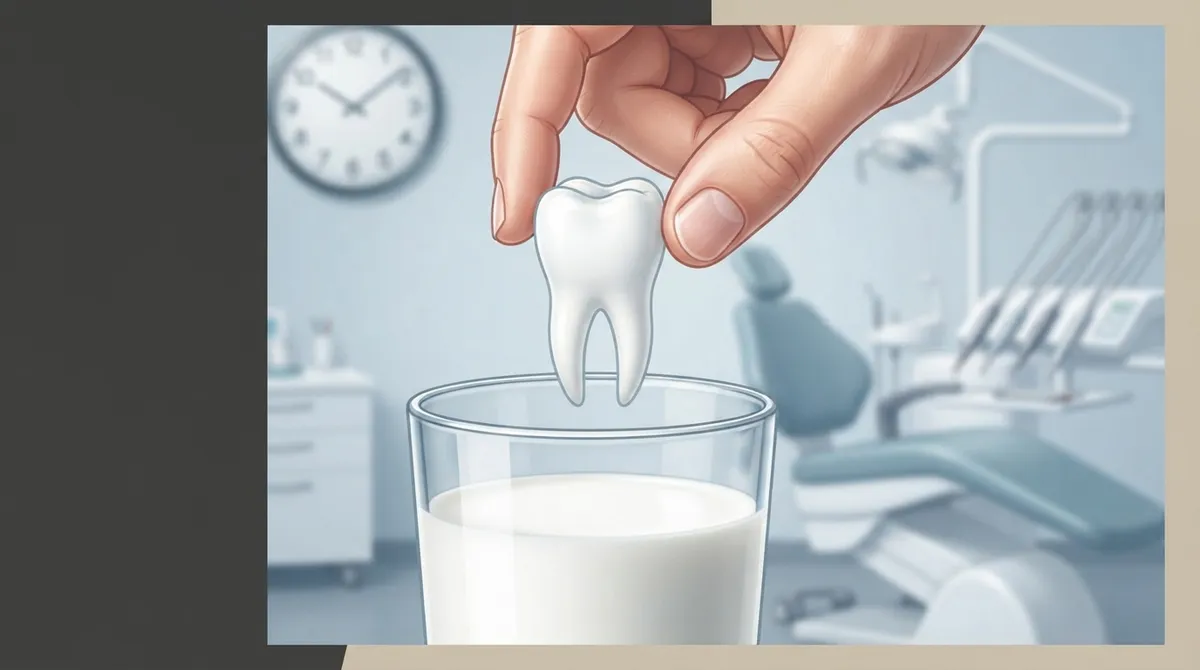
Never let the tooth dry out. Place it in a container with milk, which is gentle on the root cells. In a pinch, you can use saliva or a store-bought tooth preservation product. Avoid plain tap water since it can actually harm the tissue.
Use a clean piece of gauze or cloth and apply gentle pressure to the socket. Most bleeding slows down within about 10 minutes.
Acetaminophen or ibuprofen can help ease discomfort. Avoid aspirin for children, and never place aspirin directly on the gum tissue, since it can burn soft tissue.
This is the moment to contact us right away or call us at 305-209-2270. Dental teams like ours understand that knocked out teeth are emergencies and will do everything possible to see you fast.
The American Dental Association and the American Association of Endodontists both emphasize that the sooner you reach professional care, the better your odds of saving the tooth. Learn more from the American Dental Association, a trusted authority in oral health guidance.
Whether it's back in the socket or resting in milk, bring it along to your appointment. Your dentist needs to examine it closely, regardless of what happened before you arrived.
This might seem like a safe, absorbent choice, but dry materials pull moisture away from the tooth. This speeds up cell damage. Always choose a liquid-based storage method instead.
Once your dentist stabilizes the tooth, you'll likely need follow-up visits to monitor healing. Sometimes root canal therapy is needed later. Other times, if the tooth cannot be saved, options like dental implants or bridges can restore your smile beautifully.
When you arrive for emergency care, your dentist will examine the tooth, the socket, and surrounding gum tissue. Depending on how quickly you acted and the condition of the tooth, treatment may include splinting the tooth to neighboring teeth, prescribing antibiotics, or scheduling a root canal in the following weeks.
At Smile District, our team uses advanced digital imaging to get a clear, detailed look at the injury right away. This helps us make fast, accurate decisions so you're not left waiting and wondering. We know how stressful a dental emergency feels, and we're here to guide you with warmth and expertise every step of the way.
Sometimes, despite everyone's best efforts, a tooth simply cannot be reattached successfully. This can happen if too much time has passed or if the root sustained too much damage. If this happens to you or someone you love, please know this is not the end of your smile story.
Modern restorative dentistry offers wonderful solutions. Options like dental implants look and feel like natural teeth, function beautifully for chewing and speaking, and protect your jawbone from shrinking over time. You can read more about how dental implants work at Smile District to understand your options if replacement becomes necessary.
While accidents happen, a few simple habits can lower your risk of a knocked out tooth:
Here's a simple recap you can save on your phone for emergencies:
Living in Miami means an active, outdoor lifestyle full of beach days, sports leagues, and family fun. That also means dental emergencies happen more often than people expect. Whether you're new to the area or you've called Miami home for decades, having a dentist you trust for these moments brings real peace of mind.
Under the guidance of Dr. Sanchez, our team combines advanced technology with genuine, compassionate care. We treat every patient, from toddlers to grandparents, like family. That's part of why choose Smile District makes sense when you need fast, reliable dental care you can count on. You can also read patient reviews to see how we've helped Miami families through their toughest dental moments.
Don't just take our word for it. Check out real feedback and community updates on our Smile District Facebook page, or follow along for smile tips and behind-the-scenes moments on our Smile District Instagram page. And if you'd like to see what our neighbors are saying, visit us on Google — Smile District to read verified reviews from real patients.
A knocked out tooth is scary, but you now have the knowledge to act quickly and confidently. Remember: find the tooth, handle it by the crown, keep it moist, and get to a dentist fast. Those four things alone dramatically improve your chances of saving your natural smile.
If you or a loved one ever experiences a dental emergency in Miami, please don't wait it out at home hoping it gets better on its own. Every minute truly counts. Reach out and contact us so our caring team can help you right away, or simply call us at 305-209-2270 the moment an emergency happens. We're here for you, ready to protect your smile with the same compassion and skill we'd want for our own families.
Q: What should I do first if a tooth gets knocked out?
A: Stay calm, find the tooth, and pick it up by the crown, not the root. Try to gently rinse it if dirty and reinsert it into the socket if you can, then get to a dentist right away.
Q: Can a knocked out tooth be saved?
A: Yes, many times it can, especially if you act within 30 to 60 minutes! Keeping the tooth moist and getting emergency dental care quickly gives you the best shot at saving it.
Q: Should I store a knocked out tooth in water?
A: Nope, avoid plain tap water since it can damage the root cells. Milk is your best friend here, or you can use saliva if milk isn't available.
Q: What if the tooth can't be reinserted?
A: That's okay, don't stress! Just keep it moist in milk and head straight to the dentist. If the tooth can't be saved, options like dental implants can beautifully restore your smile.
Q: Is a knocked out tooth always a dental emergency?
A: Absolutely, yes. Whether it happened during sports, a fall, or an accident, you should treat it as urgent and seek dental care immediately for the best possible outcome.
Please call 305.209.2270 or click below to schedule an appointment online. We can't wait to meet you!